Smart Homes in India: Trends to Watch in 2026
Smart Home Basics & Consumer Guides
In 2026, smart homes in India go mainstream with Matter, scalable KNX, and faster deployments.Focus shifts to wellness, personalization, and privacy-first AI security. The market matures toward open, future-ready smart living.
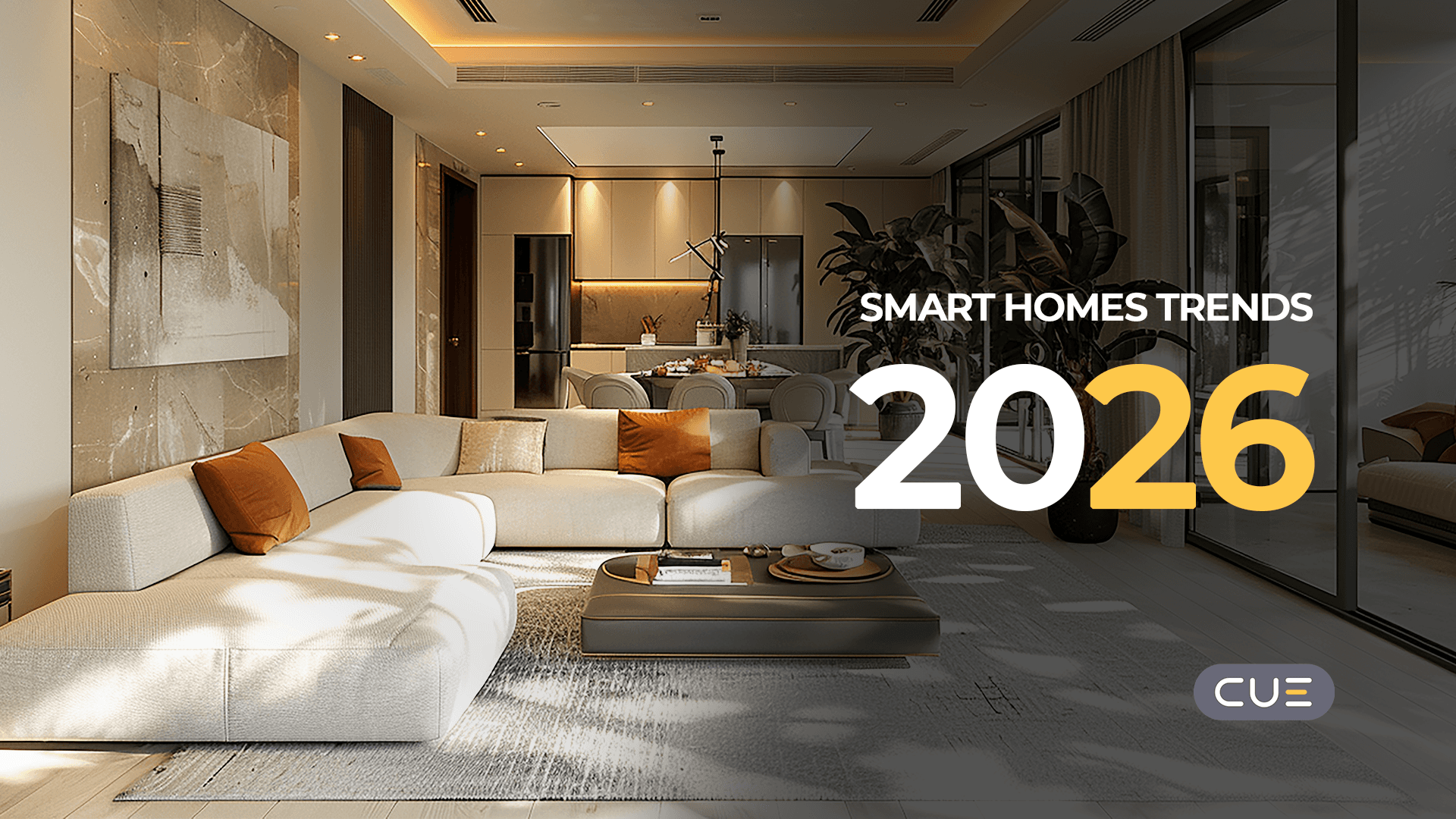
The Indian smart home market is entering a new phase in 2026. What was once a niche luxury has quickly become mainstream, driven by changing consumer expectations, falling device costs, and the arrival of open standards. For system integrators and homeowners alike, here are the top trends to watch this year.
1. Matter Becomes Mainstream
With Apple, Google, Amazon, and Samsung backing the standard, Matter is finally stabilizing in India. Expect more lighting, plug, and sensor devices that work out-of-the-box with iPhone, Android, and voice assistants, reducing the need for multiple apps.
2. KNX Expands Beyond High-End Villas
Traditionally limited to luxury projects, KNX is becoming accessible in mid- to upper-segment apartments. Platforms like Cue are reducing infrastructure costs by ₹1–2 lakhs per project, making professional-grade automation a reality for more homes.
3. Human-Centric Lighting
Lighting in 2026 is about more than just on/off control. Human-centric lighting that adjusts brightness and color temperature through the day is becoming essential for wellness-focused homes. Expect more integrators to design lighting schemes that support natural rhythms.
4. Edge AI for CCTV Analytics
Security is evolving. Edge AI analytics for CCTV systems will allow homes to detect unusual movements, recognize people, and alert homeowners without relying on cloud servers. This reduces latency, preserves privacy, and makes surveillance smarter and more proactive.
5. Mini-LED Modular Displays
The living room centerpiece is shifting. Mini-LED modular displays are emerging as a replacement for traditional smart TVs in luxury homes. They provide scalable sizes, cinematic brightness, and seamless integration with home control systems.
6. Integrated Audio Moves to Hi-Fi
Audio expectations are rising. Homeowners now want integrated audio systems that deliver not just background music but true hi-fi performance across multiple rooms. This shift is driving a move toward high-fidelity distributed audio and advanced AV-over-IP solutions that offer richer sound quality and seamless multi-room experiences.
7. User-Centric Automations
Smart homes are moving beyond remote control. In 2026, personalized automations like wake-up routines, night safety paths, and energy-saving triggers will define user satisfaction, reducing post-installation service calls for integrators.
8. Privacy and Local-First Design
With rising awareness about data security, local-first systems that run without constant cloud dependence will be the gold standard. Homes must work even when the internet doesn’t.
9. Faster Deployment Cycles
Integrators are under pressure to deliver quickly. Tools like Cue Desk and Remote ETS will cut project setup times by up to 70%, allowing more projects to be completed with fewer resources.
10. Smart Apartments & Community Living
Builders are beginning to differentiate projects with ready-to-move-in smart apartments. Expect large residential complexes to include automation for lighting, HVAC, and security by default.
The Bottom Line
2026 will be the year Indian smart homes mature. Matter will unify devices, KNX will scale, human-centric lighting and hi-fi audio will define lifestyle, and AI-driven security will raise the bar. For integrators and users, the winners will be those who embrace open standards and future-proof platforms.
Discover how Cue Home can help you lead the shift toward KNX-driven smart homes in India. Request a demo today and see the future of integration in action.